The Perfectly Balanced Week Is a Moving Target
A balanced week of activity and rest can shift with sleep, stress, and daily demands; learn to shape a workable rhythm without forcing every day into a template.
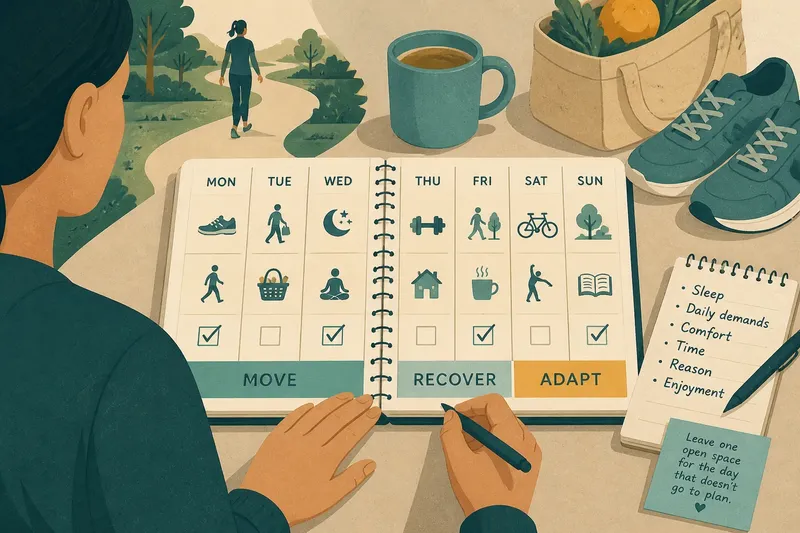
A balanced week of activity and rest depends on the demands already on your calendar. If a commute, caregiving, or a long shift leaves you tired, the same workout that felt manageable last week may not fit today. A workable rhythm accounts for those demands instead of treating planned exercise as the only movement that matters.
The aim is not to make every week look alike. It is to keep some room for movement, some room for recovery, and enough flexibility to respond when circumstances change. That calls for looking at the week as a whole, not judging it by whether each planned session happened.
What belongs in a balanced week?
Start by noticing the movement and demands already present. A walk to the bus, carrying groceries, time on your feet at work, or a physically demanding household task may affect how much energy remains for a workout. These activities are not necessarily substitutes for planned exercise, but they belong in the picture.
Recovery also takes different forms. Sleep, quiet time, an easier walk, and a familiar mobility routine may each help in different ways. A day without a formal workout can still be physically busy; an easy session can feel refreshing, or it can add to fatigue if you are already depleted.
Balance is therefore personal and changeable. A routine that suits someone with predictable evenings may not suit a person whose work shifts move around. Keep the activities you value, then leave room for the ordinary demands that shape your days.
How do you shape a week that can flex?
Use a few dependable anchors rather than assigning every day a fixed role. An anchor might be a favorite dance class, a regular walk with a neighbor, or a quiet evening you protect for rest. Treat other sessions as options that can move, shrink, or disappear when the week requires it.
Before choosing an activity, check what is true today:
- Sleep: If you slept poorly and feel foggy, choose a familiar, easier activity or rest; if you feel reasonably alert, keep the planned effort if it still fits.
- Daily demands: If work, travel, or caregiving has already taken unusual energy, shorten the session or leave it out; if the day has been ordinary, consider the original plan.
- Comfort: If you notice new, worsening, or unusual discomfort, stop or avoid the activity and seek qualified medical advice when appropriate; if movement feels comfortable, choose an effort that suits your energy.
- Time: If the session would crowd out sleep or turn the evening into a scramble, move or omit it; if there is a comfortable opening, use it without rushing.
- Reason for adding a session: If you are trying to repay a missed workout, pause and decide based on current capacity instead; if the activity genuinely suits the day, keep it as an option.
- Enjoyment: If a planned activity feels like a repeated source of dread, try a different familiar form of movement or take a break from that format; if you look forward to it, keep it as an anchor.
These checks are prompts, not a medical assessment. If pain or another symptom is severe, persistent, or unusual for you, pause the activity and consult a qualified health professional.
What might a flexible week look like in practice?
Say you have a planned group class, a neighborhood walk, and a short home workout. The class is an anchor you enjoy, but a late work shift disrupts your sleep before it. You check the situation: you feel tired, the class would make the evening rushed, and there is no need to fit every item into the week. You skip the class, keep the walk only if it feels easy and comfortable, and leave the home workout off the calendar. The resulting plan has less formal exercise than you intended, but it protects sleep and avoids stacking demands onto an already difficult day.
That is a decision about fit, not a verdict on discipline. On a quieter day, you can return to the class or another activity without trying to compensate for what you skipped.
Which questions help you adjust your weekly activity?
Should I reschedule a missed workout?
Only if it fits the rest of the week and still feels like a useful choice. If rescheduling would crowd out sleep or make other commitments harder, let the session go rather than adding pressure.
Does everyday movement belong in the plan?
Yes, notice walking, errands, and time on your feet as part of the day’s overall demands. That context can help you decide whether a planned session still suits your energy.
When should I choose an easier activity?
If your usual effort feels unexpectedly demanding, or tiredness and discomfort are affecting how you move, reduce the effort or rest. If symptoms are severe, persistent, or unusual, consult a qualified health professional.
Do I need the same schedule each week?
No. A few familiar anchors can make it easier to return to movement, while the timing and amount of other activity can change. Keep what fits and revise what repeatedly clashes with your real responsibilities.
How can you tell whether the rhythm fits?
Look across ordinary weeks rather than drawing conclusions from one unusually busy or quiet stretch. Notice whether you can make room for activity without routinely sacrificing sleep or other responsibilities, and whether you have opportunities to recover. If the plan often leaves you worn down or requires constant rearranging, its structure may be asking too much.
At the end of a week, write down one part that worked and one that created friction. If evening sessions repeatedly collide with family commitments, try shifting one to a different opening. If several active days leave you depleted, make the next plan less demanding. Changing one feature at a time makes it easier to judge whether the new arrangement fits.
A balanced week of activity and rest is a pattern you can revise, not a schedule you have to defend. Keep an enjoyable anchor, account for the movement your day already contains, and make each adjustment based on the circumstances in front of you. When planning your next balanced week, leave one open space for the day that does not go to plan.