A Short Walk or Gentle Stretch Break? Choose by the Moment
Choose a short walk or gentle stretch break by your space, energy, and need for a change of scene, so a pause fits the moment without extra strain.
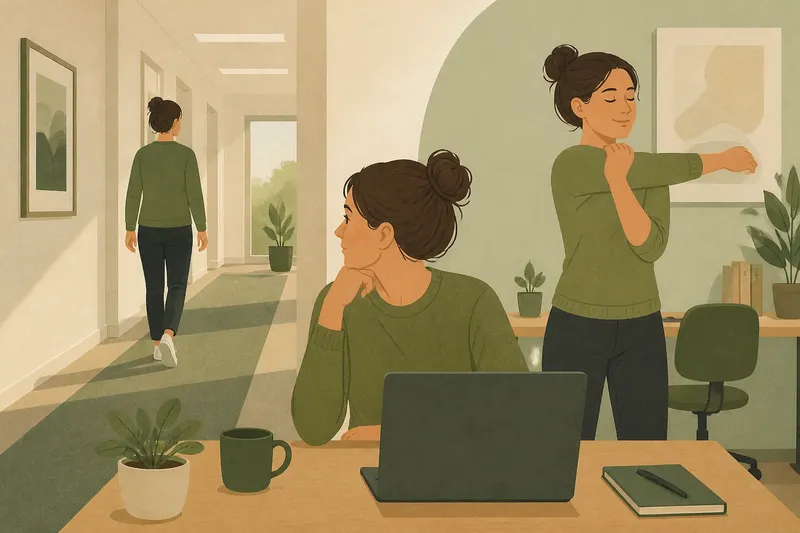
A short walk or gentle stretch break can make a seated workday feel less static, but each changes the pause in a different way. A walk changes your surroundings and direction; a stretch keeps you close while shifting how your body is positioned.
Choose based on the kind of interruption you want, not on which option seems more virtuous. Neither needs to become a workout. If movement causes pain, tingling, dizziness, or other unusual symptoms, stop and seek guidance from a qualified health professional when appropriate.
What does a short walk change?
A walk can take your attention away from a screen and give you a different view. It also asks you to leave your current spot, so the route, weather, and demands of the room may matter. When those logistics feel like too much, an indoor corridor or a walk to refill water can keep the outing simple.
Keep the pace easy and choose a route that does not require extra preparation. The point is to change your setting for a moment, not to reach a destination or make the pause more strenuous.
Imagine you are working at home and have a clear hallway but no interest in going outside. You walk to the end of the hall and back, then return to your desk. The observable result is a brief change of view and position, without the decision of choosing an outdoor route.
Choose a walk when leaving your spot sounds appealing and the route is straightforward.
What does a gentle stretch change?
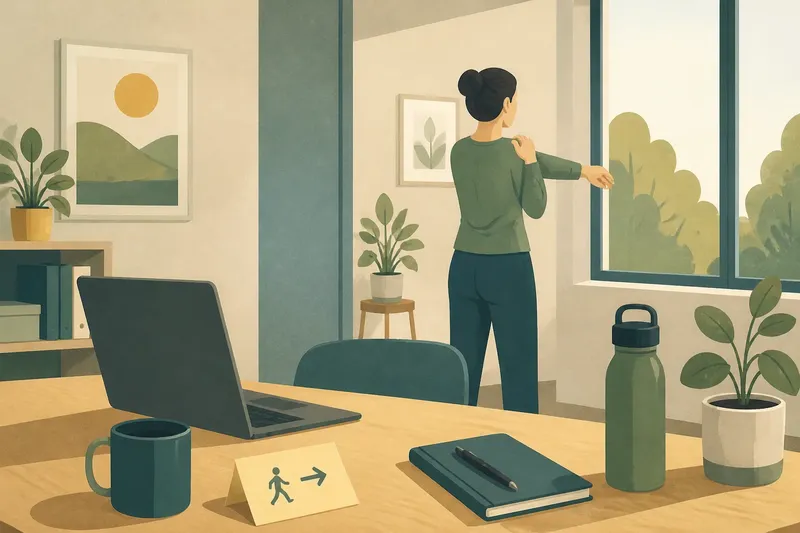
A stretch lets you stay near your work while giving a particular area a chance to move. It can be useful when you do not want to leave the room, but it is not automatically discreet: reaching beside a conference table may feel more conspicuous than walking to get water.
Pick a comfortable, smooth motion rather than trying to force a deeper range. You might roll your shoulders gently or turn your head within an easy range. Stop if the motion brings pain, tingling, dizziness, or a sense that something is wrong.
If privacy is the main concern, consider whether a small walk would feel more natural in the setting. The best choice is the one that lets you move without having to keep evaluating how it looks.
How do walk breaks and stretch breaks differ?
- Check whether you want a change of scenery; if you do and there is an easy route, choose a walk, otherwise stay nearby for a stretch or position change.
- Check whether you need to remain available; if you do, choose a gentle stretch at your spot, otherwise consider a brief walk.
- Check whether one area feels ready for comfortable movement; if it does, choose a gentle motion for that area, otherwise avoid targeting it and try an easy walk or position change.
- Check whether the room has enough clear space for standing; if it does, try a comfortable stretch, otherwise stay seated or wait for a more suitable place.
- Check whether the route is clear and easy to use; if it is, take an unhurried walk, otherwise remain where you are or choose another clear area.
- Check whether either option feels uncomfortable or unsafe; if it does, stop and wait for a suitable pause, otherwise choose the movement that fits your preference.
Say you are in a shared office, want a change of scene, and have a quiet corridor nearby. You check that leaving will not interrupt a meeting, choose the corridor over a stretch beside the conference table, walk to its end and back, and return to your desk. The result is a change of view without drawing attention to a stretching routine; if the corridor were busy, the tradeoff would favor staying put and changing position instead.
Which option fits common situations?
What if I cannot leave my workspace?
Try a gentle stretch or a simple change of position if there is room to move comfortably. If the area is cramped, stay seated or wait until a clear space is available.
What if I want a change of scene?
Choose a short walk if a nearby route is accessible and leaving will not disrupt what you are doing. A hallway or courtyard can provide a different view without a destination.
What if one area feels stiff?
Try a smooth, easy movement that includes that area, without pulling or bouncing to seek a stronger stretch. Stop if it causes pain or unusual symptoms, and consult a qualified health professional if concerns persist.
What if I feel tired or restless?
Consider whether leaving the room sounds appealing or draining. A relaxed walk offers a change of scene, while a stretch or position change keeps the pause close and quiet.
What if neither option suits the setting?
A crowded train, narrow shop floor, or meeting may leave little room to walk or stretch. Do not force movement through a busy aisle or reach where you could bump someone or lose your balance.
Instead, make a discreet change if it feels comfortable: shift your seated position, rest your arms differently, or stand when there is a natural opportunity. If moving does not feel safe in that moment, wait for a better setting.
How can you keep the break simple?
Let the pause end when you have had the change you wanted. There is no need to complete a routine or make up for a missed break. Decide in the moment: “I want a change of scene,” or “I want to move without leaving.”
For a short walk or gentle stretch break, the useful distinction is whether you want to change your surroundings or move close to where you are. Check the space, choose the comfortable option, and return to your day when the pause feels complete.