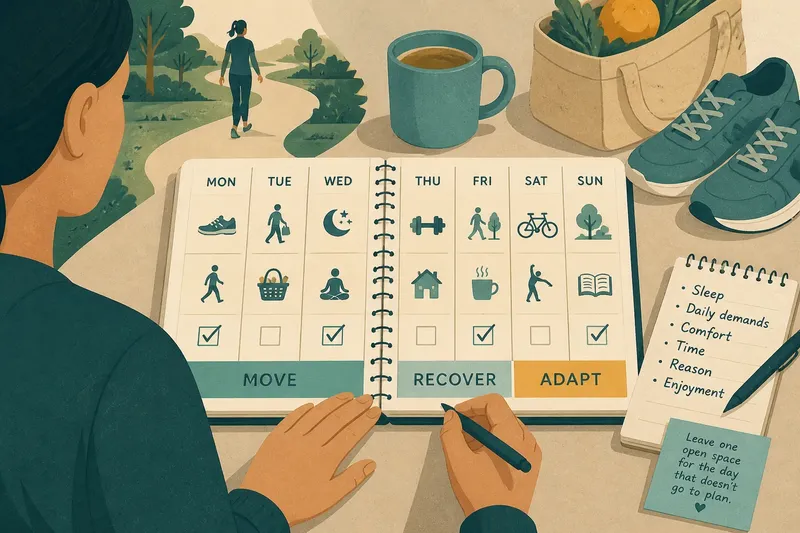
The Changing Idea of Rest Between Active Days
Rest between active days can mean quiet time, ordinary movement, or a lighter day. Learn how to match recovery to your energy and daily demands.

Rest between active days works best when it responds to the effort you have already spent and the demands still ahead. After a long walk, a day of errands may call for a different choice than a quiet morning at home. The point is to notice what is asking something of you, not to classify every moment as exercise or rest.
What does rest between active days include?
Rest between active days is time spent easing the demands of intentional activity. It may involve sleep, quiet time, routine tasks, or comfortable movement. It does not require a particular posture or a blank day in your calendar.
Consider the whole day, not just the workout box. Walking to a grocery store, standing through a busy shift, or carrying laundry all use energy, even if none is planned exercise. A day without a formal session can still be full; a brief, easy walk may feel like a welcome change after hours at a desk.
What matters is the demand of the activity in context. The same walk might feel comfortable one day and burdensome another. If it starts to feel like more work than you want, you can shorten it or stop.
Why can a strict rest-day label mislead?
A firm boundary around effort can be helpful, especially when someone feels ill, unusually tired, or in pain. But treating a rest day as a rule against all movement can make ordinary choices feel like violations. An easy trip outside is not necessarily a workout, and staying still is not the only way to ease a busy day.
The opposite pressure is possible, too. If every pause seems like lost progress, a person may fill time that would be better spent resting. The question is not whether movement is good or bad; it is whether the next demand fits the day you are having.
For a useful distinction, ask whether an activity feels optional and easy to leave. A relaxed walk with no fixed route leaves room to turn back. A timed session that feels hard to stop may add a different kind of pressure.
How can you choose a fitting kind of rest?
Check in with three things: your general energy, any discomfort, and the other demands on the day. Then choose a modest option that you can revise. You might skip planned exercise, keep it but make it gentler, or take a quiet break instead.
- Check whether ordinary movement feels comfortable; if it does, choose an easy activity, and if it does not, favor quiet time or routine tasks only as needed.
- Check for pain that is persistent or worsening; if present, stop the activity and seek advice from a qualified health professional, and if absent, decide based on comfort and energy.
- Check whether the day already includes prolonged standing or demanding chores; if so, avoid adding a challenging session, and if not, choose movement only if it feels welcome.
- Check whether a planned workout feels burdensome; if it does, shorten or replace it, and if it feels manageable, proceed at an easy level and reassess.
- Check whether fatigue is unusual or does not ease; if so, seek qualified health advice, and if not, choose a quieter or more active option according to how you feel.
- Check whether a recovery activity is becoming another obligation; if it is, drop the plan in favor of unstructured time, and if it is not, keep it simple and stop whenever you want.
Imagine you spent the previous day clearing a crowded garden bed and planned a brisk walk the next morning. You wake with low energy but no pain, and the day's schedule includes grocery shopping on foot. You decide to skip the brisk walk, take the shopping trip at an unhurried pace, and leave the rest of the morning open. If that ordinary walking feels tiring, you can use a ride or ask for help; the tradeoff is less movement in exchange for less demand on a day that already feels full.
If pain interferes with ordinary activity, worsens, or persists, or if fatigue feels unusual and does not ease, consult a qualified health professional. General wellness guidance cannot determine what is causing symptoms.
How should you think about rest between active days?
What counts as active recovery?
Active recovery usually refers to easy movement chosen for comfort rather than challenge. It might be a relaxed walk or a few gentle mobility movements, provided they feel welcome and easy to stop.
Does a rest day require staying still?
No. It can mean taking a break from planned or demanding exercise while continuing ordinary activities. If you feel that very little movement suits the day, that is also a reasonable choice.
Is stretching necessary on a lighter day?
No. Stretching is optional, and a movement that feels uncomfortable is not made restorative by calling it recovery. Stop if it brings pain or adds strain.
Should a hard activity always be followed by a rest day?
There is no single schedule for everyone. The effort involved, the rest of your routine, and how you feel afterward all inform what is sensible next.
How can recovery stay simple?
Recovery can become another obligation if you feel required to choose the ideal activity or follow a perfect sequence. Keep the decision small: would the next thing add effort, or make the day feel easier to manage? If you are unsure, choose an option that is easy to stop, such as a short walk without a set route or a quiet break without a planned workout.
Rest also need not earn its place by improving tomorrow's exercise. A meal without rushing, time away from demands, and sleep matter as parts of daily life, not just preparation for another session. Let a pause be a pause.
When should you question a recovery rule?
Advice about rest may assume a certain activity, level of effort, or health situation. Before applying a rule, ask what it is meant to address and whether that concern fits your circumstances. Follow instructions from a clinician or qualified exercise professional when they relate to a health condition, persistent symptoms, or returning to activity after an injury.
For everyday decisions, use your comfort and the day's demands as information, not as a judgment of commitment. Rest between active days can include stillness, routine activity, or gentle movement; choose what fits now and change course if the day unfolds differently.