How to Rebuild a Movement Cue After Your Routine Breaks
Rebuild a movement cue after a routine break by attaching a small, familiar activity to a daily anchor, making it easier to restart without overplanning.
A movement routine often breaks at the cue, not the activity: the walk used to follow lunch, but lunch now happens at a different time. To rebuild a movement cue after a routine break, connect a familiar activity to something that still happens reliably in your day.
This is different from trying to recover a missed schedule. The task is to make the next action easy to recognize: after which everyday event, in which place, and with what simple movement? A clear cue can help an activity feel like part of the day again without requiring a full weekly plan.
What makes a useful movement cue?
A useful cue is an ordinary event you can notice, followed by a movement action you already understand. “After I put my lunch dishes in the sink, I’ll walk around the block” is more actionable than “I should move more.” The event points to the action, and the action has a clear starting place.
Choose an anchor that is reasonably steady, such as making morning coffee, closing your work laptop, or changing clothes after work. Avoid tying the activity to an event that has recently become unpredictable. If your workday ends at different times, the end of a meal may be a more dependable cue.
Keep the first action familiar. A walk on a known route, a few comfortable stretches beside a chair, or an easy trip up and down the stairs at home asks less of you than inventing a new routine while you are also rebuilding the habit.
How do you choose the anchor and action?
Look for a daily event that already has a place in your routine, then pair it with a movement option that fits the location and your circumstances. Decide what happens if the usual setting is unavailable, too. That small alternative makes the cue easier to follow without turning it into a rigid appointment.
- Check whether the anchor happens reliably; if it does, pair movement with it, and if it does not, choose a steadier event.
- Check whether the action can start where you will be; if it can, keep that pairing, and if it cannot, choose a nearby or at-home alternative.
- Check whether the action feels familiar; if it does, use it as written, and if it feels daunting, make it gentler or shorter.
- Check whether weather or access could disrupt the plan; if so, name an indoor alternative, and if not, keep the outdoor option.
- Check whether the cue depends on another person’s availability; if it does, choose a version you can do independently, and if it does not, keep the shared plan.
- Check whether pain, illness, or professional advice affects the activity; if it does, follow qualified guidance or seek it before proceeding, and if it does not, use your familiar, comfortable option.
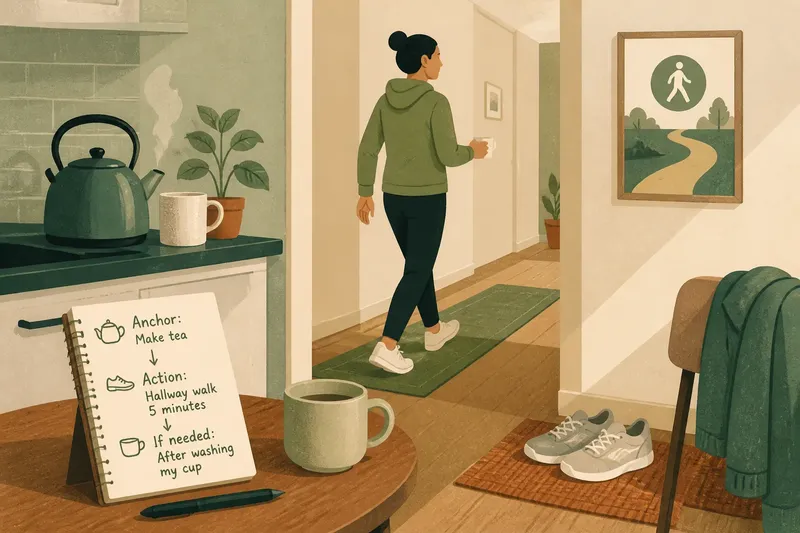
Say you used to take an evening walk after feeding your dog, but a change in household routine has made that cue unreliable. You notice that you still make tea after dinner. You decide that once the kettle is on, you will walk through the hallway and back at an easy pace; if the kitchen is busy, you will take the same short walk after washing your cup instead. The cue is now an event you still encounter, and the observable result is that you have a specific moment and place to begin.
How can you tell whether the cue is working?
For a little while, notice whether the anchor actually reminds you of the action. You do not need a tracking app or a detailed log. A brief note on a paper calendar can record what happened: “after lunch, walked,” or “meeting ran late; used the after-dinner cue.”
If you repeatedly notice the anchor but cannot begin, the action may be too complicated, poorly placed, or a poor fit for your energy. Change one part of the pairing: move the shoes beside the door, choose a route closer to home, or attach movement to a different event. If the cue simply does not occur, replace the anchor rather than blaming yourself for missing it.
Make the cue visible where it helps. Shoes by the door can prompt a walk; a chair left clear beside a mat can make a familiar mobility sequence easier to start. Set out only what you need for that activity, so preparation does not become another task.
What if the new cue does not fit?
Some days will disrupt even a well-chosen anchor. If an unexpected obligation takes over, leave the original pairing alone and use the next ordinary event that suits you. Avoid attaching the missed activity to a demanding catch-up plan; the purpose of the cue is to make starting recognizable, not to create a debt.
If your energy or health has changed, reconsider the activity itself. Choose gentle, familiar movement only if it feels appropriate, and follow advice from a qualified health professional for concerns related to illness, injury, symptoms, or medical restrictions.
When the environment is the obstacle, change the route or setting rather than abandoning the cue. A short indoor walk through a clear hallway may serve the same starting purpose as an outdoor loop, provided that option is comfortable and suitable for you.
Which questions help rebuild a movement cue?
Should I use the same activity I did before?
Not necessarily. Keep the activity if it still fits your schedule, setting, and current needs; otherwise choose a familiar alternative that is easier to begin.
What if my daily schedule changes?
Attach movement to an event that remains more stable, such as finishing a meal or changing out of work clothes. If no daily anchor is dependable, use a flexible event you can recognize when it occurs rather than a fixed clock time.
Should I track every time I move?
No detailed tracking is required. A brief note can help you see whether the cue appears in your day and whether the action is practical, but stop if keeping a record becomes a burden.
How do I know when to change the cue?
Change it when the anchor repeatedly fails to happen or the action is hard to start for a consistent, practical reason. Keep the part that works and adjust the part that does not, such as choosing a different event or a simpler movement option.
What small note helps the next choice?
After trying the pairing, record one concrete observation: the cue occurred after dinner, the shoes were easy to find, or the route did not suit the weather. That detail helps you decide whether to keep the pairing, move it, or choose a different action.
Rebuilding a movement cue after a routine break is easier when the plan names a real event and a clear first action. Keep the pairing modest, and let the next adjustment respond to what actually happens in your day.